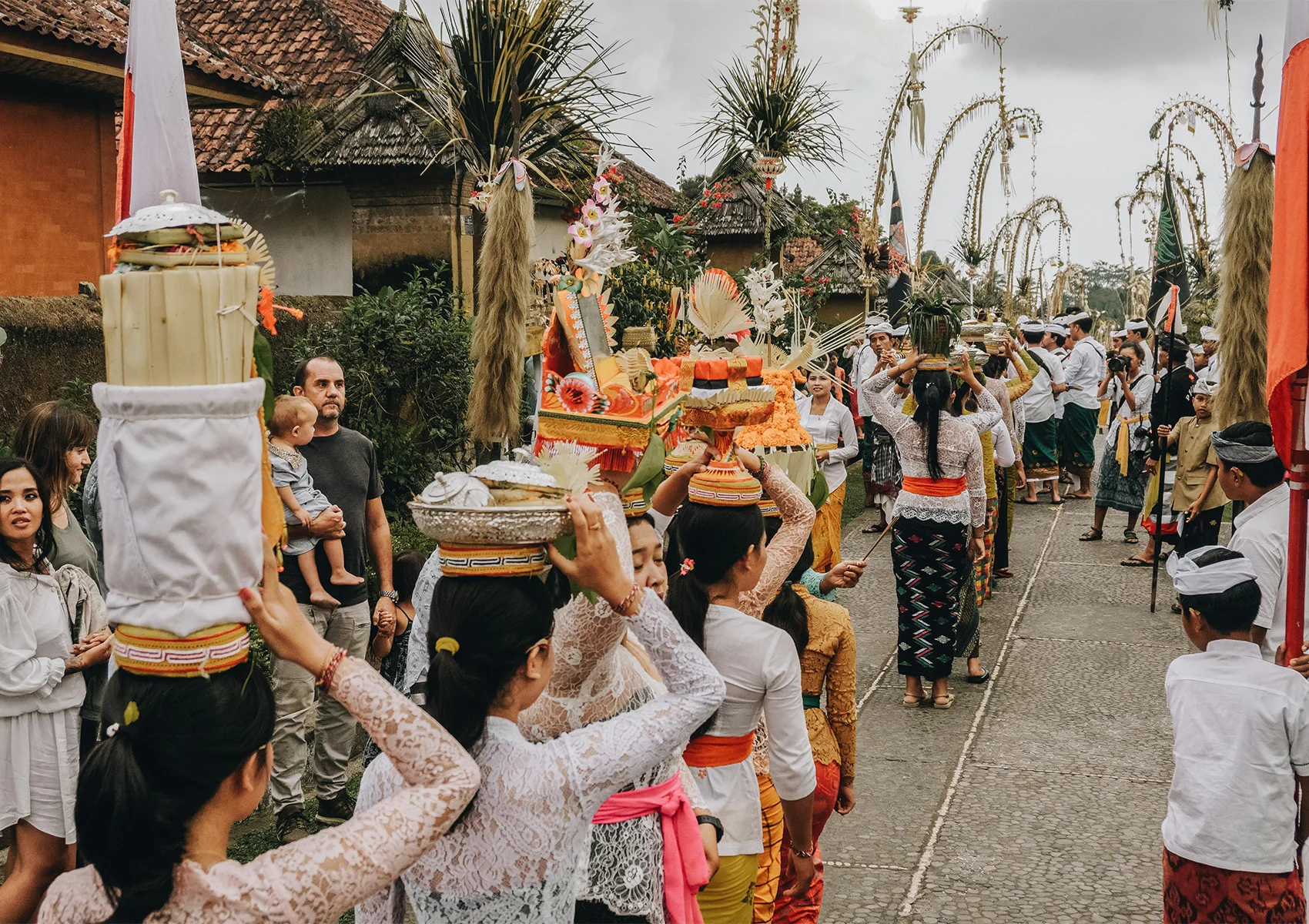
Bali, also known as the Island of the Gods, is a cultural hub rich in traditions. Every aspect of life in Bali is marked by numerous ceremonies, from purification rituals to grand temple anniversaries. Each involves preparing offerings for the gods with the utmost care and painstaking detail. The island comes alive with colour, music and dancing. Many visitors hope to witness these sacred events up close during their trip.
However, tourists are not automatically welcome to all ceremonies. Some parts are restricted to worshippers only, closed during specific sacred rituals, or limited to participants from the local community. Even when entry is allowed, visitors are expected to stay respectful and quiet, dress appropriately in a sarong and sash, and avoid entering inner sanctums unless permitted.
There is always some ceremony happening in Bali, but knowing where and how to observe respectfully is essential. Below we have ranked the 10 most important celebrations on the Balinese calendar, starting with the very biggest.
What Is the Biggest Ceremony in Bali?
Nyepi, the Day of Silence, is the biggest and most important ceremony in Bali. Unlike any other celebration in the world, the entire island shuts down for 24 hours. No travel, no lights, no fire, no work and no entertainment. Even the airport closes. It marks the Balinese New Year (Saka) and is a day of complete silence, fasting and meditation.
These ceremonies in Bali range from the island-wide silence of Nyepi to intimate family cremations. Below, we explain each one.
Nyepi – The Day of Silence (March)
Several days before Nyepi, Balinese Hindu communities gather for Melasti, a sacred purification ritual by the sea, lakes, or rivers. Dressed in white and carrying tedung parasols and umbul-umbul banners, they come to cleanse sacred objects and restore balance before the new year.
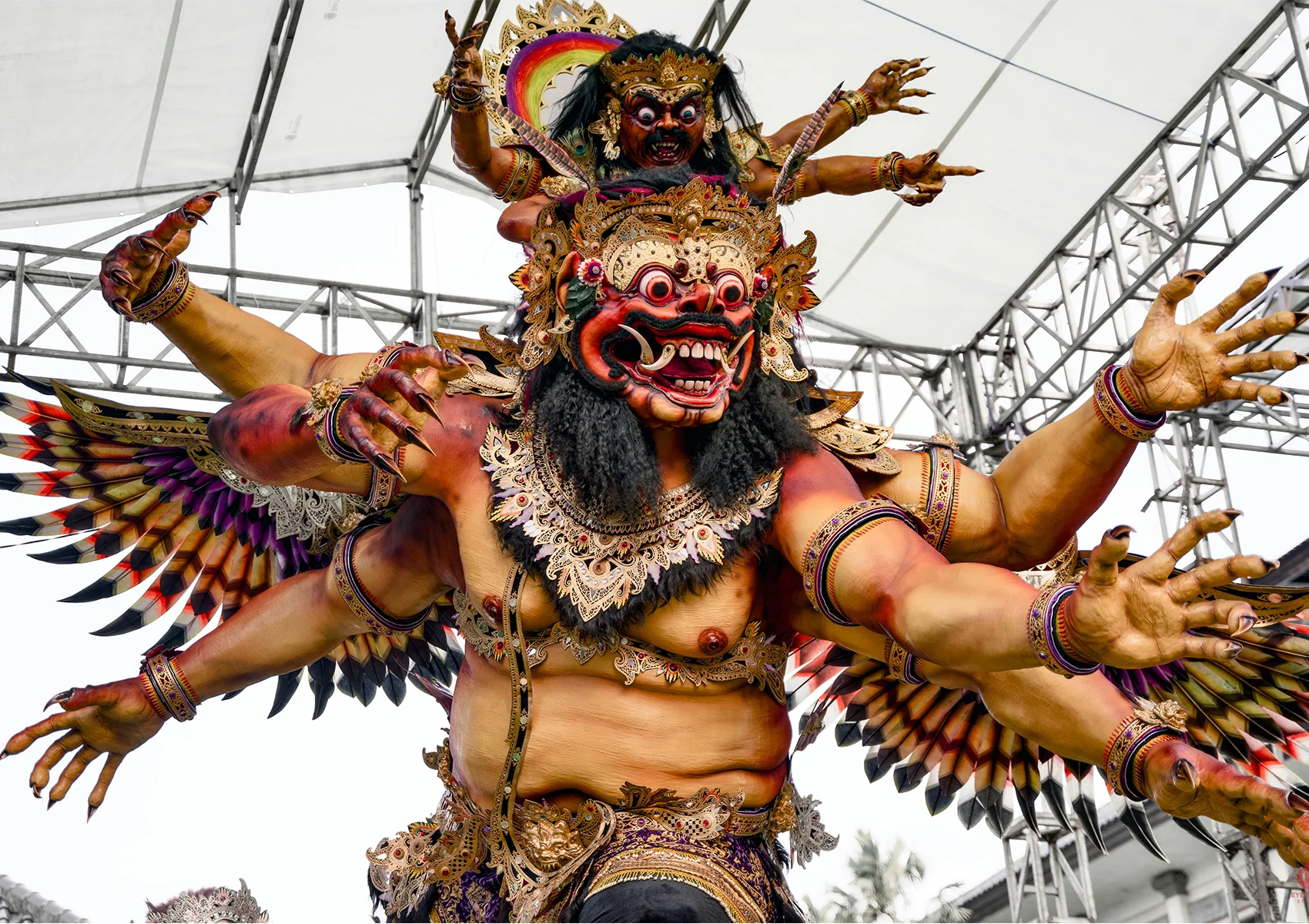
On the eve of Nyepi, the Ogoh-ogoh parade happens. Each village creates a large, scary statue made of bamboo and paper, symbolising demons or evil spirits. These statues are paraded through the streets and then burned, representing self‑purification and the cleansing of evil.
On Nyepi day itself, the island falls silent for 24 hours. Lights are kept low, businesses are shut, and no travelling is allowed. The only people outdoors are the Pecalang (traditional security guards) and emergency services. Tourists must remain inside their hotels or villas. It is a unique, peaceful day that allows Bali to rest and recharge.
The day after Nyepi, life returns to normal.
Upcoming Nyepi: March annually (dates vary). Check the Balinese calendar.
Best villas to experience Nyepi: Bali Hidden Villas. Each villa offers complete privacy and a peaceful setting to fully experience Nyepi’s silence.
What Is the Most Important Festival in Bali?
Galungan is the most important festival in Bali. It celebrates the victory of good (Dharma) over evil (Adharma) and occurs every 210 days.
Galungan – Victory of Good Over Evil (Every 210 days)
During Galungan, ancestors are believed to visit their families on earth. The Balinese must be hospitable and welcoming through prayer and offerings. Balinese women create beautiful offerings from flowers and fruit, which are then taken in processions to the temples.
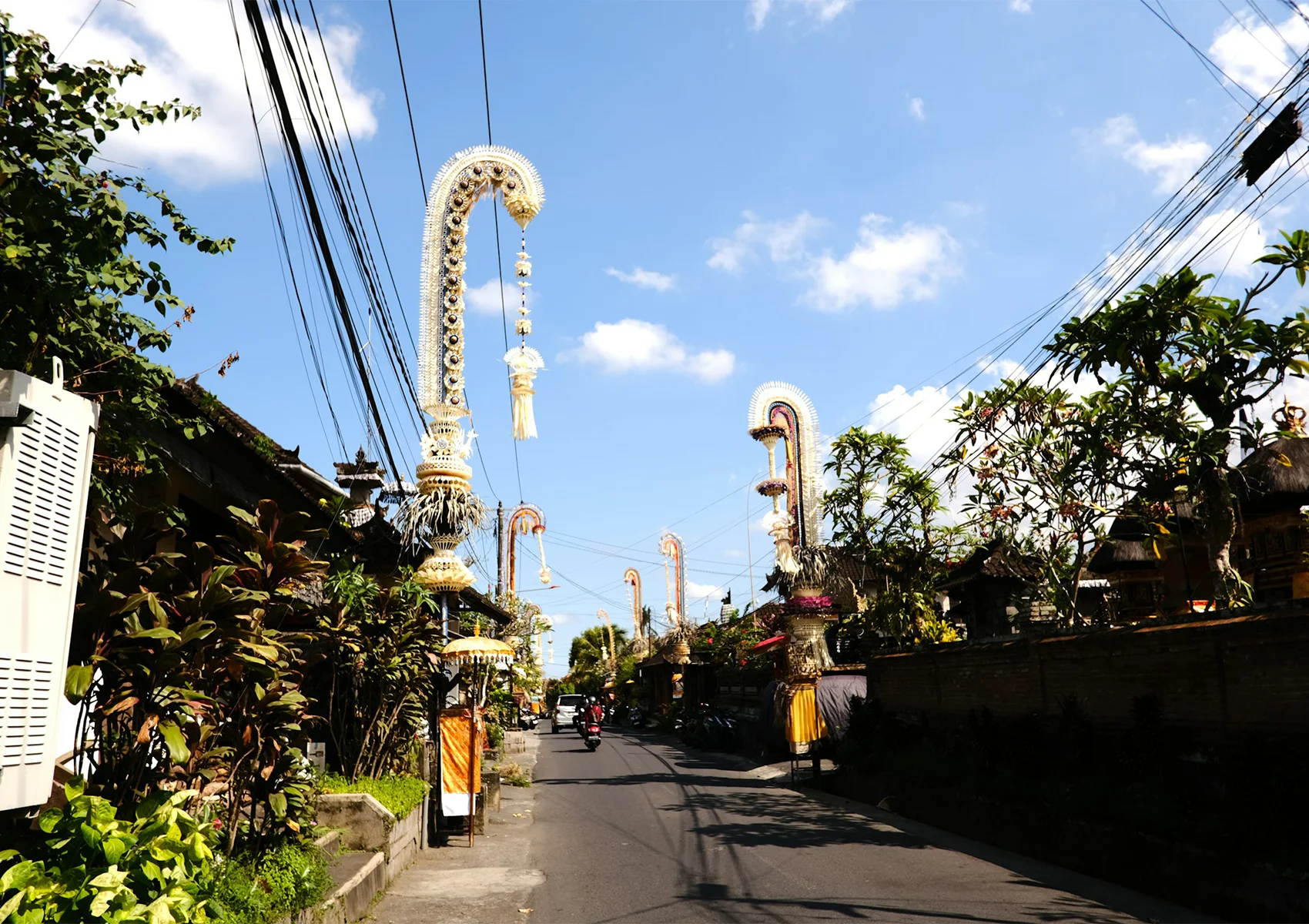
The streets of Bali are decorated with penjor. These are tall bamboo poles adorned with woven coconut leaves, flowers, and offerings hanging from the ends. These penjor symbolise prosperity and gratitude.
Best villa to experience Galungan: Villa Tau in Kenderan. Located among rice fields, you can wake up to penjor lining the roads and witness processions without the crowds.
Kuningan – The Farewell to Ancestors (10 days after Galungan)
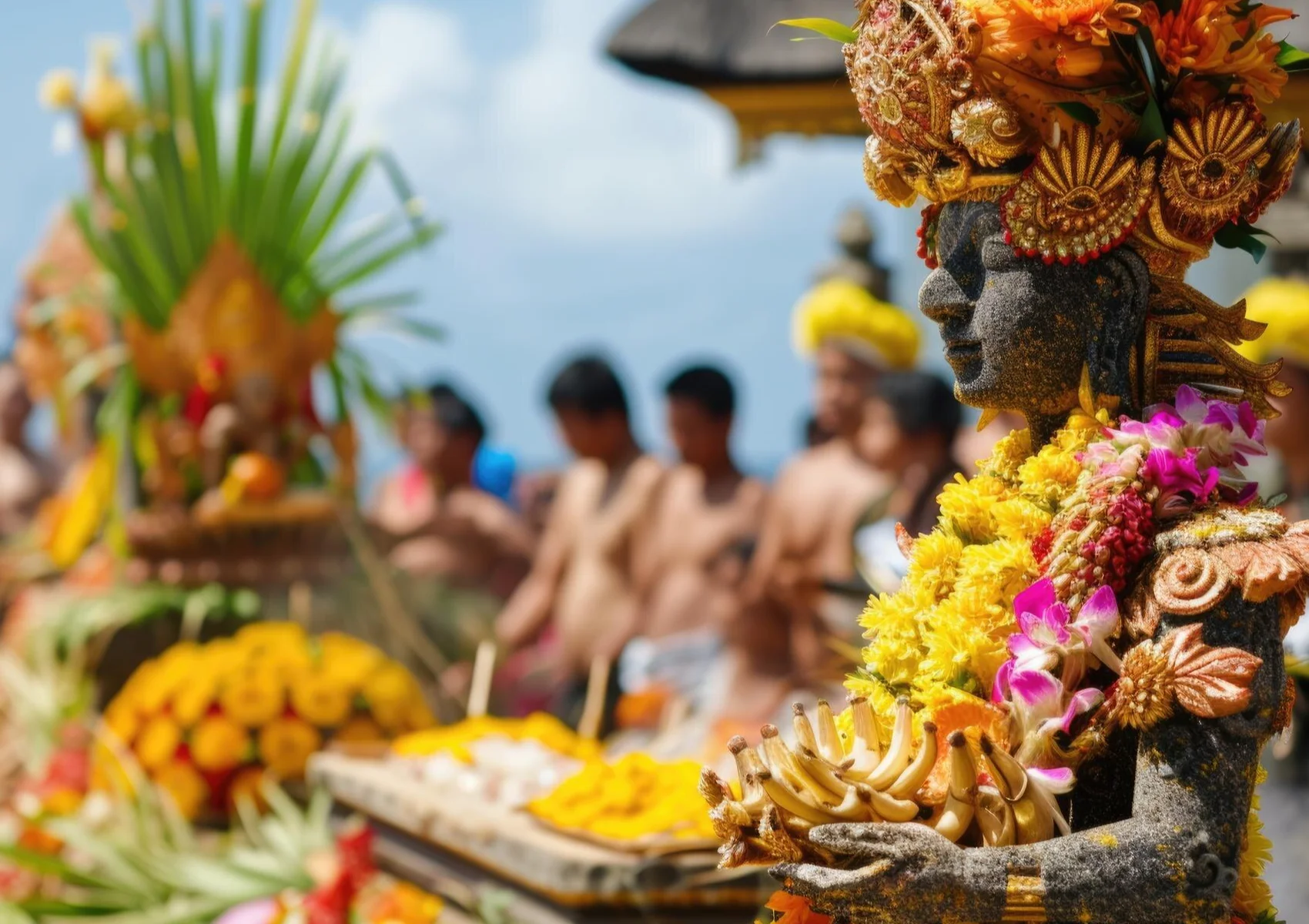
Kuningan marks the final day of the Galungan period. On this day, ancestors return to heaven. Families prepare offerings of yellow rice and other traditional foods. The streets are lively with cultural performances. It is a day of gratitude and farewell.
After Kuningan, the Balinese visit family and loved ones to enjoy the end of this beautiful festival.
Upcoming Galungan & Kuningan: Every 210 days (approximately every 6 months).
What Is the Traditional Ceremony in Bali?
Ngaben is a Balinese Hindu cremation ceremony with deep spiritual significance. It is a sacred rite of passage that is approached with great respect, as families honour the passing of a loved one while also supporting the belief in the soul’s continued journey.
Ngaben – Cremation Ceremony (Dates vary by family)
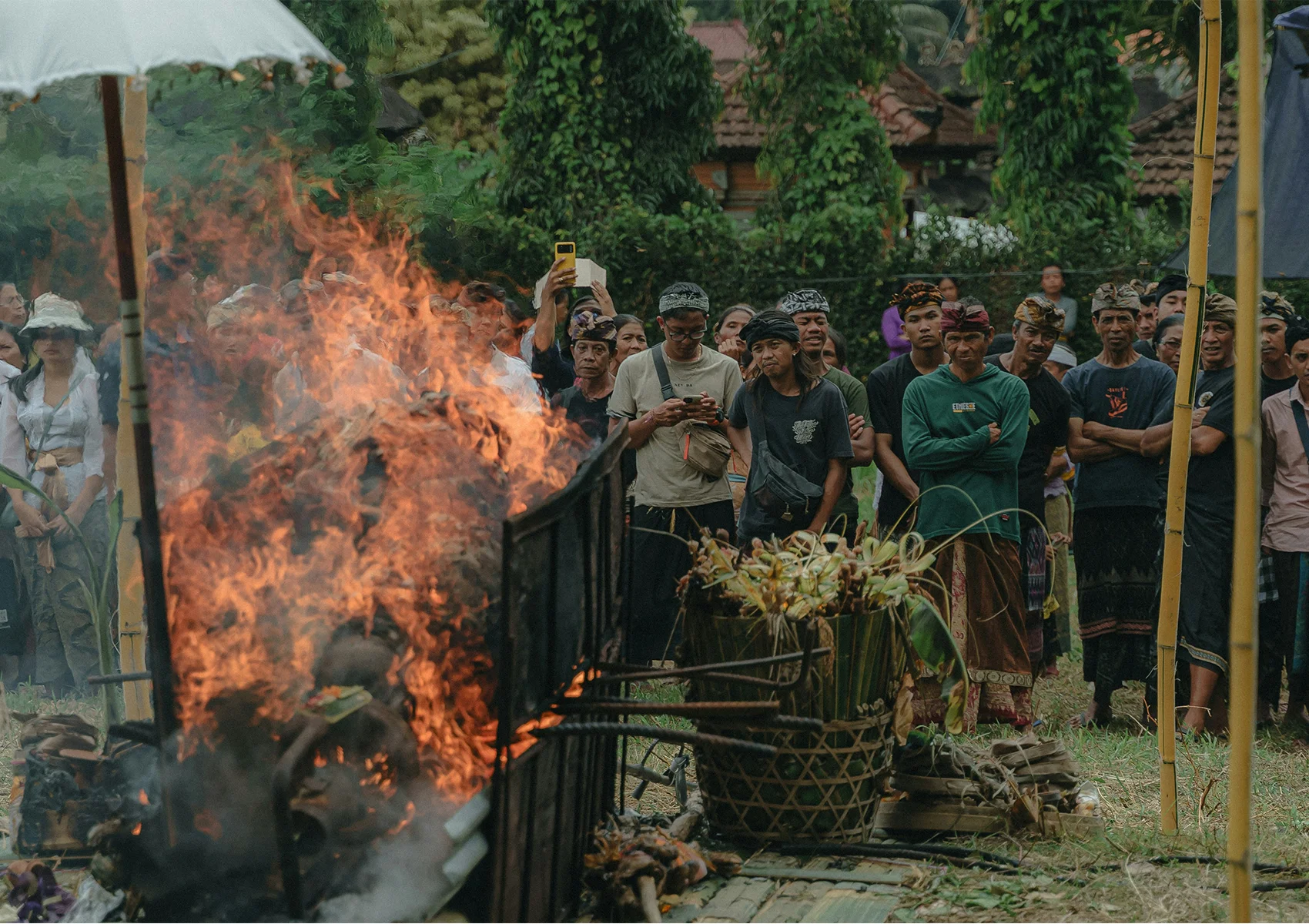
In Balinese Hindu belief, the cremation ceremony helps release the soul from the physical body so it can continue its journey toward reincarnation or, ultimately, liberation (moksha). Families prepare symbolic structures such as wadah (ceremonial towers) and animal-shaped sarcophagi known as lembu, often representing a bull or other sacred form.
The body is placed within the lembu, and a procession carries it to the cremation site. Along the way, the structure is gently moved as part of a ritual practice that symbolises the transition between life stages and helps guide the spirit on its journey.
At the cremation site, the tower and lembu are cremated as part of the final rite. While Ngaben can require significant preparation and community involvement, it is also a deeply collective expression of respect, remembrance, and spiritual support. Families often experience both sorrow and a sense of acceptance, as the ceremony marks the soul’s release. In some cases, mass cremation ceremonies are held, allowing multiple families to participate together.
Other Major Calendar Ceremonies
4. Saraswati Day – Honouring Knowledge
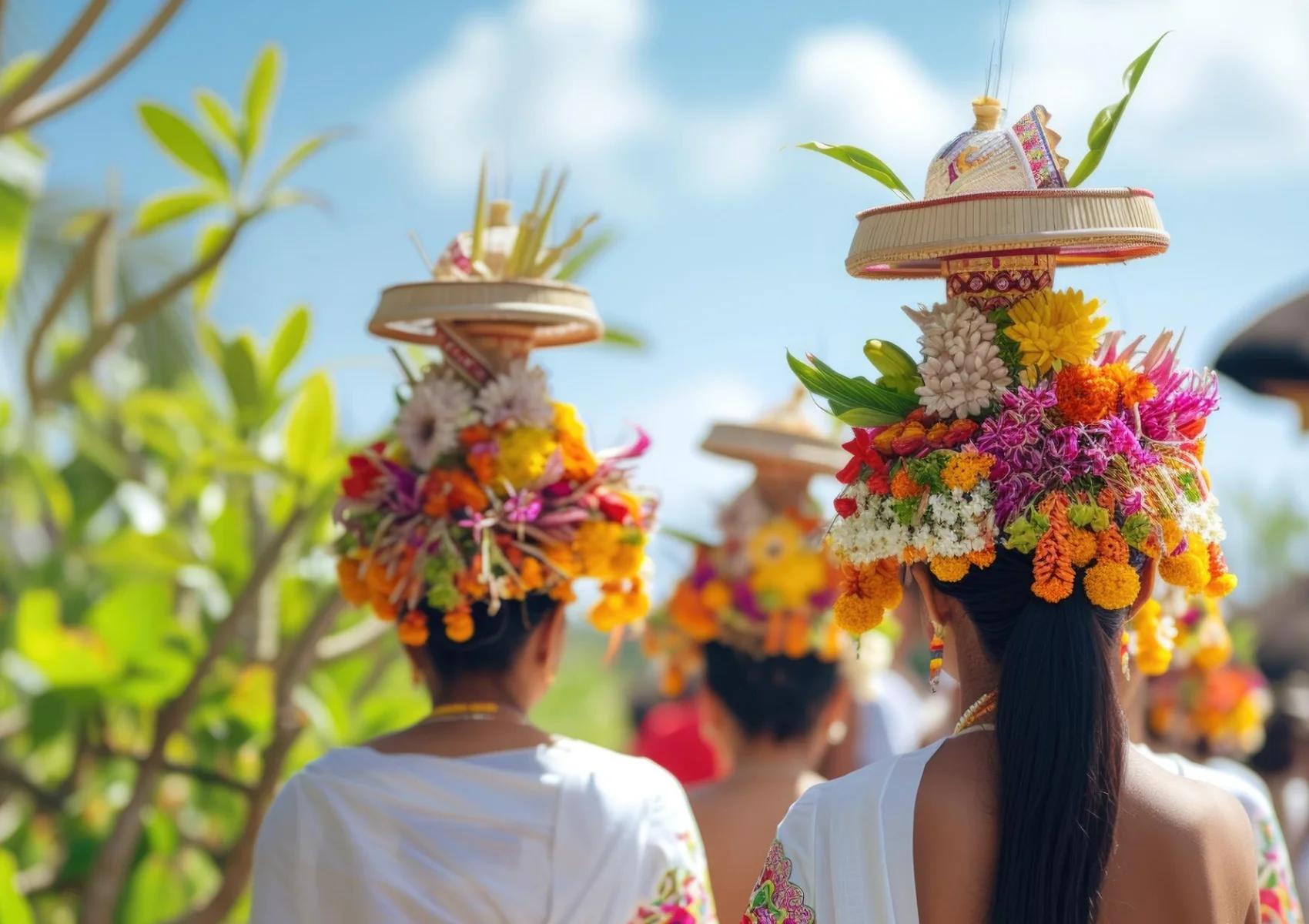
Saraswati is dedicated to the goddess of wisdom, knowledge, and the arts. The Balinese make offerings and prayers at schools, workplaces, homes, and temple shrines to honour her blessings. Books and sacred texts are blessed. Goddess Saraswati is depicted with four arms holding a zither, scriptures and rosary beads.
Upcoming Saraswati: Every 210 days according to the Balinese Pawukon calendar. Dates vary each year; check online for the exact day.
5. Siwa Ratri – Night of Meditation (February)
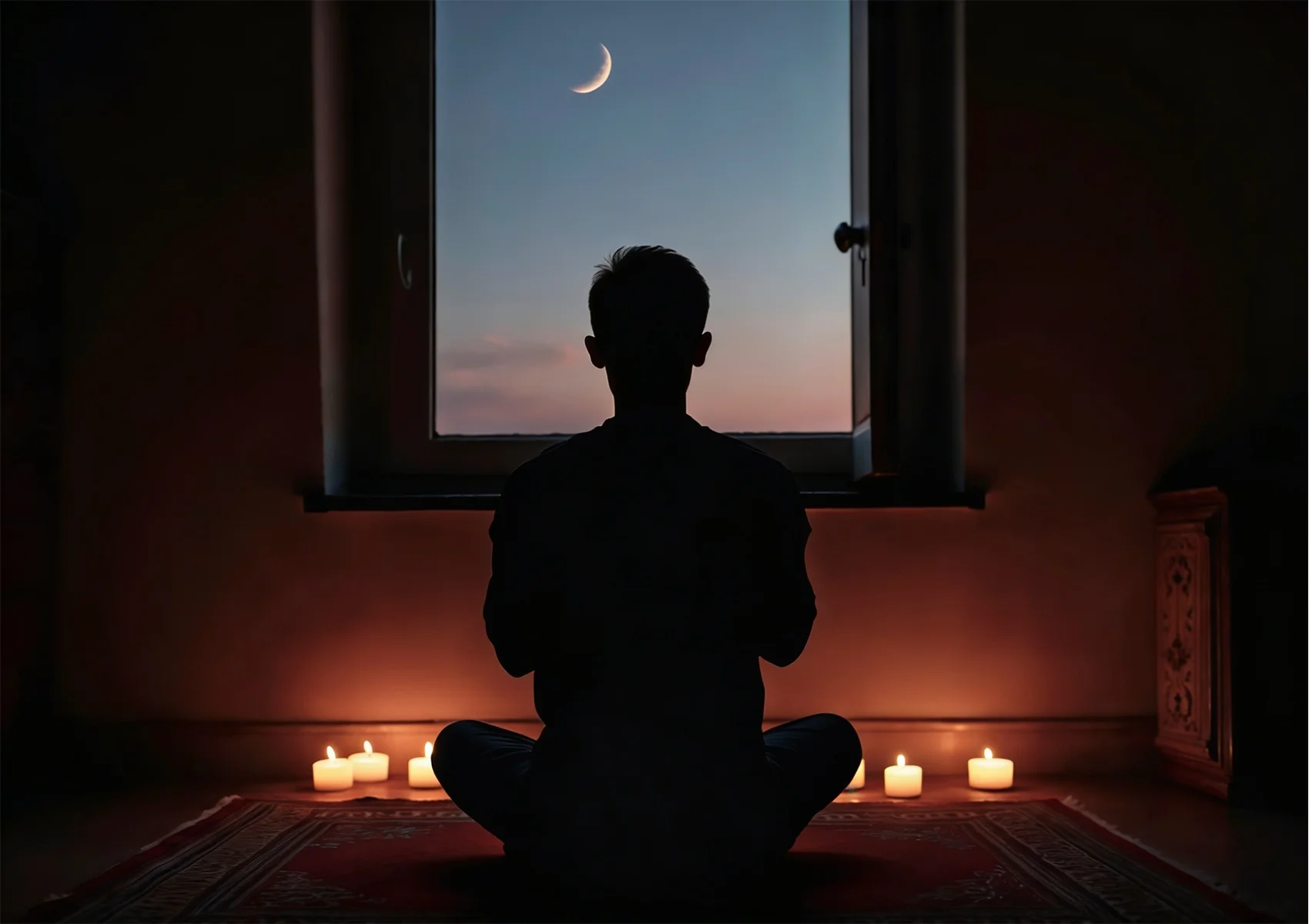
A night of introspection in which the Balinese spend the entire night in prayer, asking for forgiveness for the past year. The ritual consists of fasting for 24 hours, remaining silent for 12 hours, and staying awake throughout the night (approximately 12 hours). The aim is to get closer to God and practise self‑control.
Upcoming Siwa Ratri: Typically February or March (date varies according to the lunar calendar).
6. Odalan – Temple Anniversary (Every 210 days)
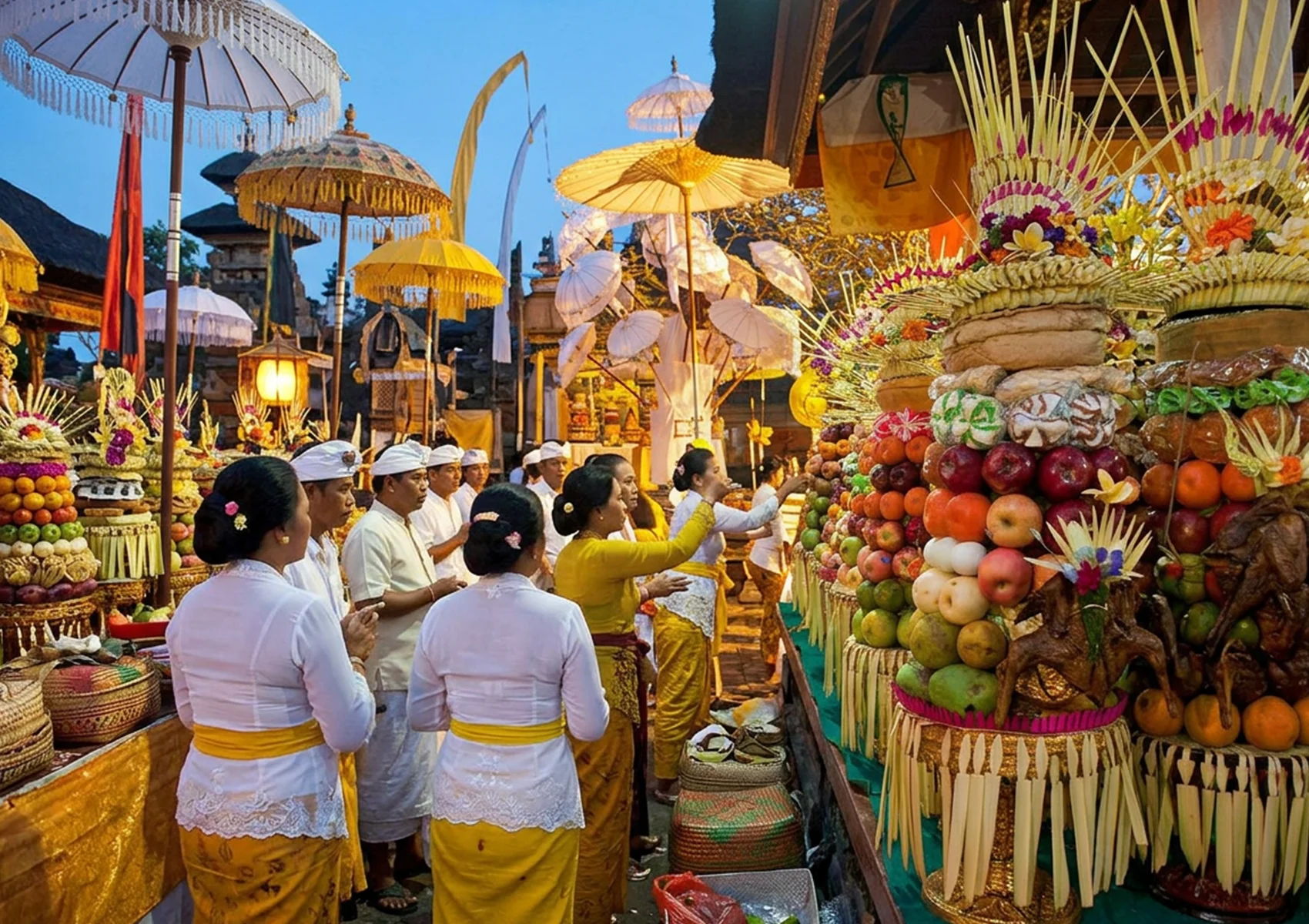
Every temple in Bali celebrates its own Odalan (temple anniversary). The Balinese honour the deities that look after the temples, inviting them to temporarily descend and partake in offerings. Prayers, offerings, dances and songs are performed. The duration varies: a standard Odalan may last 1 to 3 days, while a larger celebration (Odalan Karya Agung) can extend to 11 days or more. Temples are decorated beautifully, and penjors are erected. Sacred statues (pratima), which serve as temporary vessels for the deities, are cleaned and brought to the temple.
Best villa to experience Odalan: Villa Sagitta in Pejeng Kangin. Surrounded by ancient temples and living traditions, the area is home to ceremonies held at Pura Penataran Sasih, Pura Pusering Jagat, Pura Kebo Edan, and Goa Garba.
7. Tumpek Landep – Blessing of Metal Objects (Every 210 days)
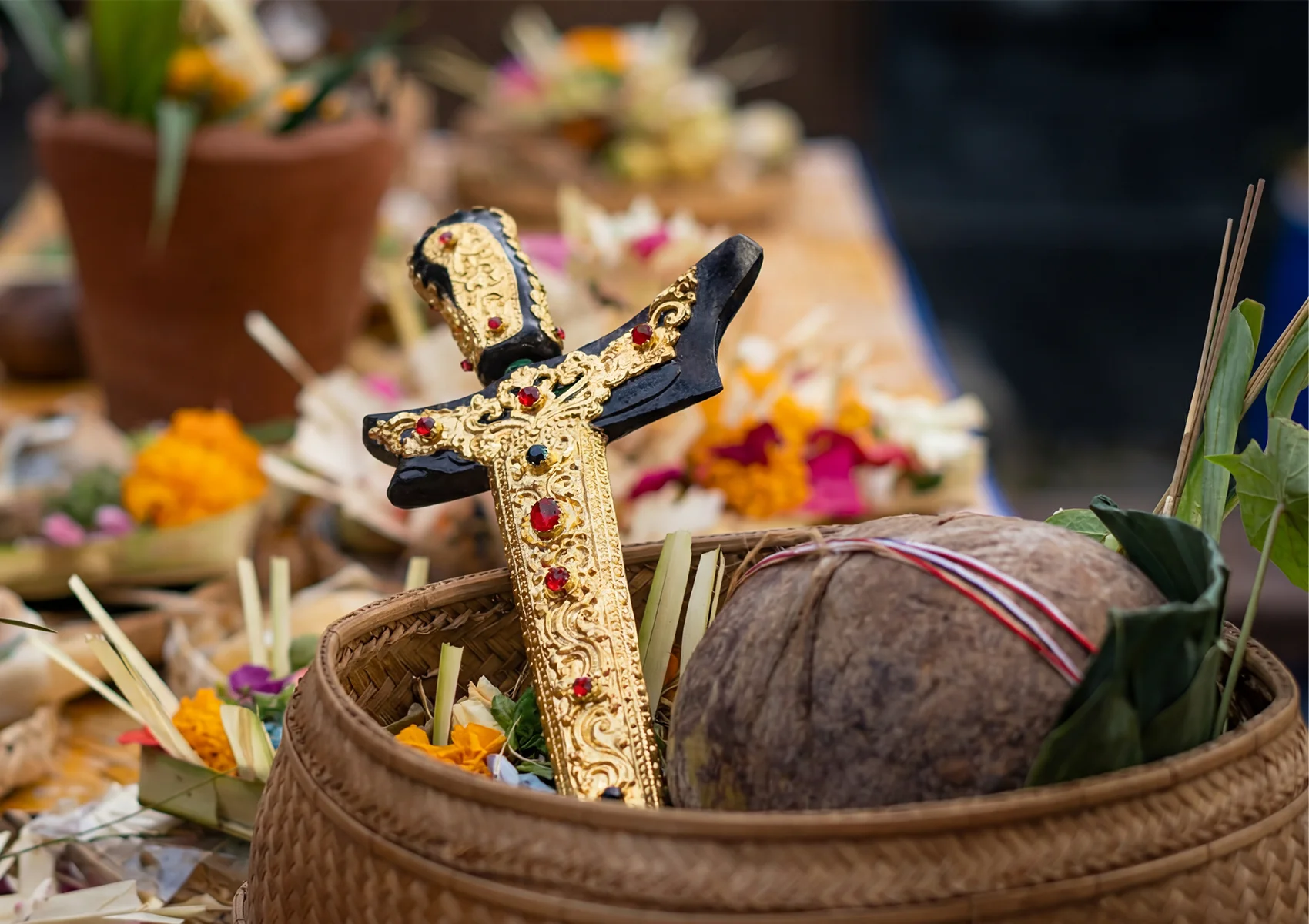
Tumpek Landep celebrates the balance between spiritual sharpness and the tools used in daily life. On this day, metal objects, from ceremonial weapons to family motorcycles, are blessed with offerings and holy water as symbols of protection and gratitude.
8. Tumpek Kandang – Blessing of Animals (Every 210 days)
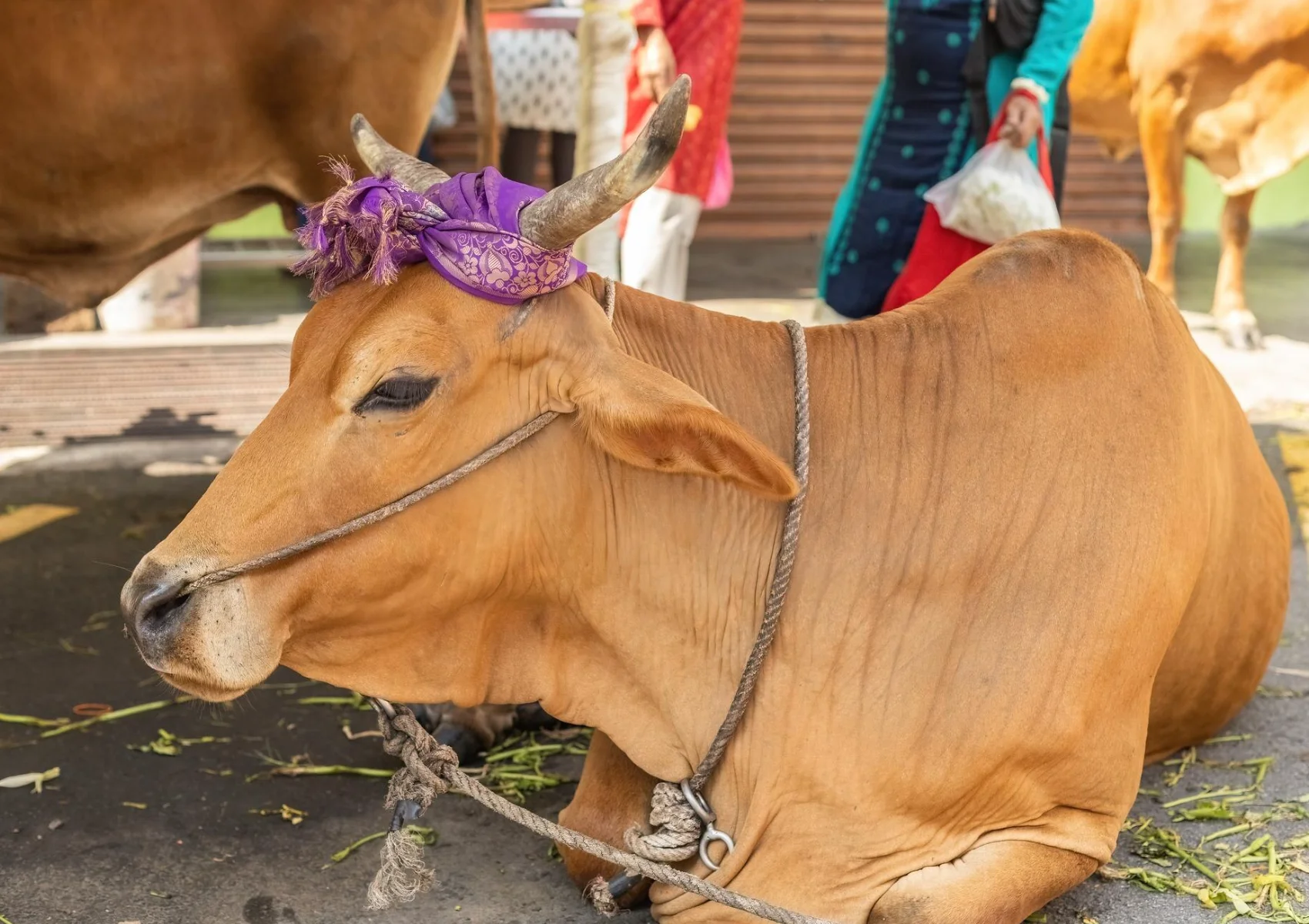
A celebration of animals, which are highly valued by the Balinese for their assistance in human life. On this day, household animals such as cows, pigs, chickens and ducks are fed special foods and sprinkled with holy water.
9. The Full Moon Ceremony (Purnama – Monthly)
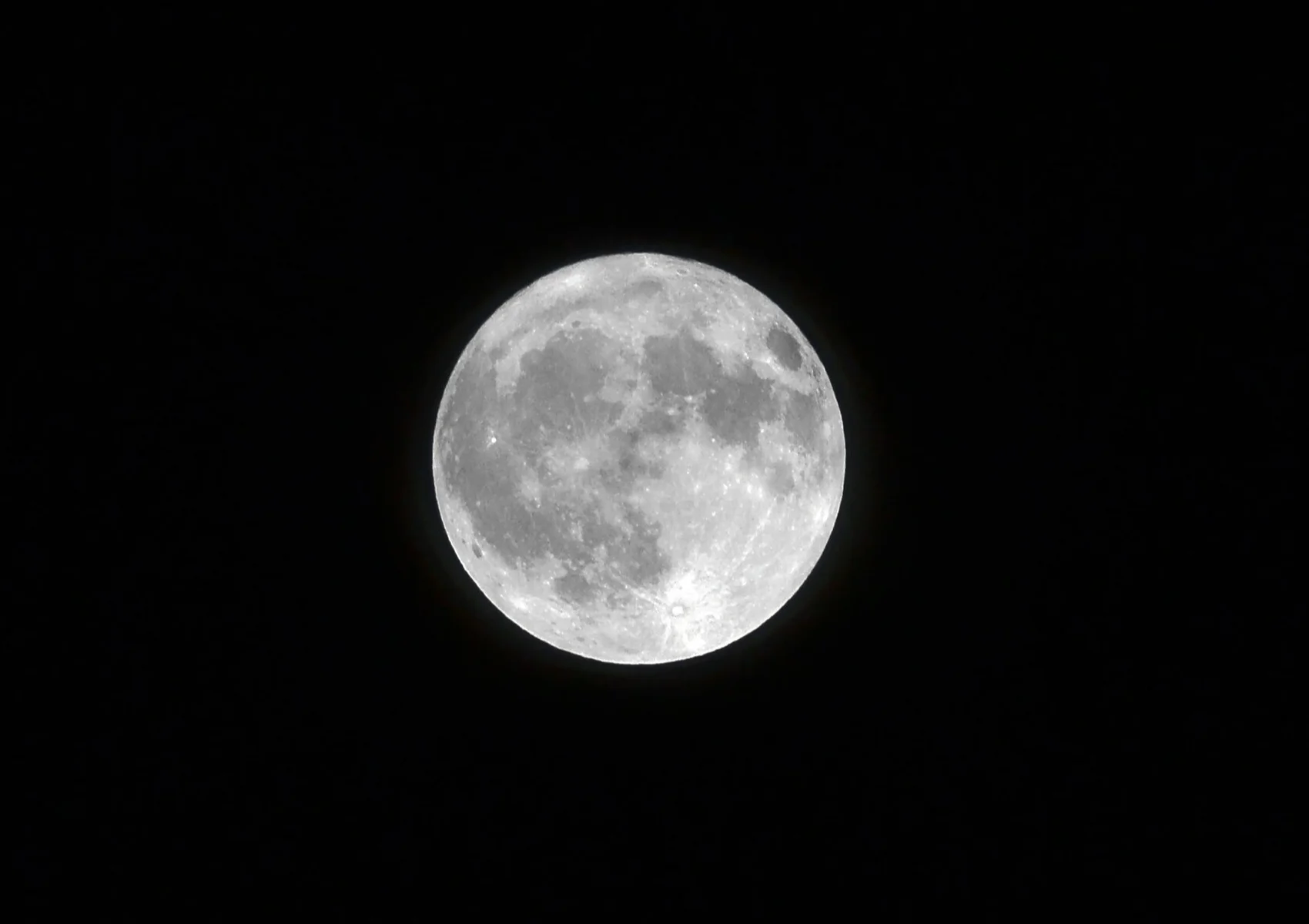
The Balinese celebrate the full moon once a month as the time when God Chandra blesses the people with light. Offerings of fruit, food and flowers are prepared, and people visit temples for prayer and meditation. Full moon rituals also include bathing in holy water at the temple to cleanse oneself of sins.
A Ceremony You Can Join Any Day
10. Melukat – A Balinese Purification Ritual
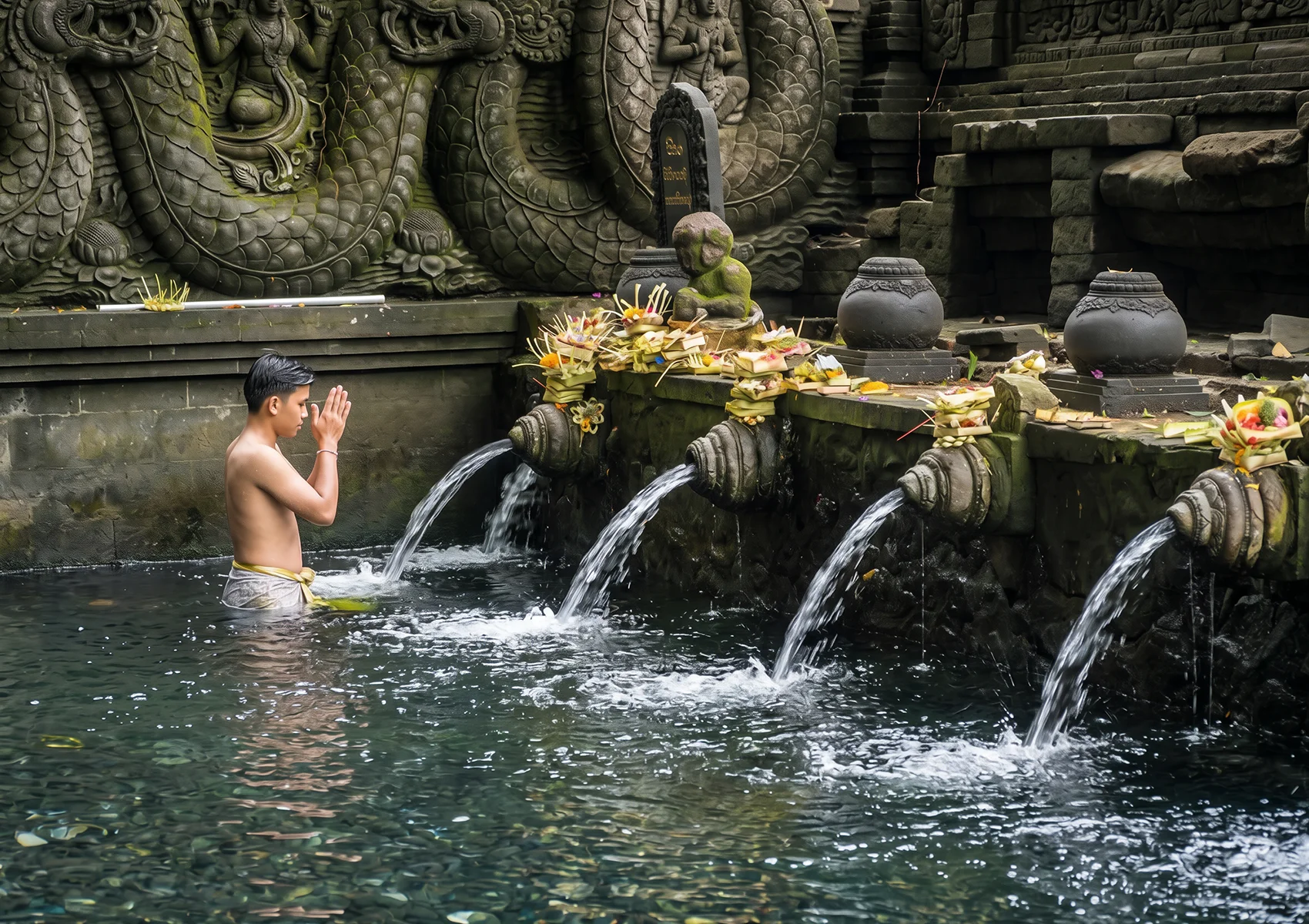
Unlike calendar‑based ceremonies, Melukat has no fixed date and can be performed on any day. It is one of the most important purification rituals visitors can participate in. It involves bathing in holy water at sacred springs such as Tirta Empul or Pura Gunung Kawi. The Balinese believe Melukat cleanses the mind, body and spirit of negative influences. Tourists are welcome to join.
Best villa to stay near Melukat sites: Villa Sagitta is just a short drive from Tirta Empul Temple.
FAQ: Google’s Most Asked Questions
What is the biggest ceremony in Bali?
Nyepi, the Day of Silence, is Bali’s biggest ceremony. The entire island shuts down for 24 hours. No one is allowed outside, the airport closes, and all businesses stop. It takes place every March.
What is the traditional ceremony in Bali?
Ngaben, the cremation ceremony, is the most traditional Balinese ritual. It celebrates the soul’s journey to the afterlife with elaborate towers, animal‑shaped sarcophagi and a lively community procession.
What is the most important festival in Bali?
Galungan is the most important festival in Bali. It celebrates the victory of good over evil, occurs every 210 days and is marked by penjor bamboo poles, family gatherings and temple offerings. Kuningan follows 10 days later as a farewell to ancestors.
Why Book Direct with Bali Hidden Villas for Ceremony Experiences?
Witnessing a Balinese ceremony is best done from a private, comfortable base. By booking directly with Bali Hidden Villas, you get:
- Best Price Guarantee: more budget for cultural experiences
- Free Airport Transfers for specific stays
- Daily Gourmet Breakfast: fuel for early morning processions
- Concierge Service: our team can advise you on safe, respectful viewing of ceremonies near your villa
- Privacy: return from a busy temple festival to your own peaceful sanctuary
Crafting Your Cultural Journey
The best time to visit the Island of God is during one of its sacred ceremonies in Bali. Whether you seek the dramatic silence of Nyepi, the colourful processions of Galungan, or the spiritual cleansing of Melukat, Bali Hidden Villas places you at the heart of these traditions without sacrificing comfort.
Book your stay today and experience the true magic of the Island of the Gods.